Finding the Best Journals for Writing: What Works After Years of Testing
I have been writing for a living for more than two decades. In that time I have filled hundreds of notebooks, tested dozens of brands, and ruined more pens on bad paper than I care to count. The question I hear most often from other writers is simple: what are the best journals for writing? The answer is never one size fits all. It depends on how you write, where you write, and what you want the finished notebook to feel like when it is full.
This article is not a list of specs. It is a practical guide built from real use, real mistakes, and real preferences that have shifted over the years. If you are looking for the best journals for writing, the first thing to accept is that no single notebook will suit every project. But with a little thought about your habits, you can find the one that fits best.
Paper Quality Is Not a Luxury
I used to think any notebook would do. I bought cheap spiral pads from the drugstore and wrote with ballpoint pens that skipped and bled. The experience was frustrating, but I did not know any better. The first time I tried a Rhodia notebook, with its smooth, coated Clairefontaine paper, I understood what I had been missing. The pen glided. The ink dried fast. There was no ghosting on the reverse side. That single change made writing feel less like a chore and more like a craft.
Rhodia remains a reliable choice, especially for fountain pen users. The paper handles wet ink better than almost anything else I have tried. Clairefontaine, the mill that makes Rhodia's paper, also produces its own branded notebooks. They share the same smooth finish and are slightly more affordable. If you write with gel pens or rollerballs, you will appreciate how clean the lines stay.
For those who prefer a bit more texture, the Midori MD Notebook offers a different kind of pleasure. The paper is creamier, softer, and develops a nice patina with age. It is fountain pen friendly without being glossy. I use one as a reading journal, and the slightly rough surface slows my hand just enough to make the writing feel deliberate.

Structure and Flexibility
Some writers need a hard spine and a pen loop. Others want a flexible cover they can fold back. I have used both and found that the best journals for writing are the ones that disappear in your hands. You should not be fighting the notebook while you are trying to think.
Leuchtturm1917 notebooks are famous for a reason. They come in a wide range of colors, include numbered pages, a table of contents, and two ribbon bookmarks. The paper is smooth and takes fountain pen ink well, though there is a bit of ghosting with wetter nibs. I keep one on my desk for long-form drafting. The structure helps me stay organized, and the hardcover protects the pages when I toss it into a bag.
Moleskine is the brand many people reach for first. I have used them for years, but I have to be honest: the paper quality has declined. It is still fine for ballpoint or pencil, but fountain pen users will see bleed-through and feathering. The brand has strong sentimental value for many writers, and the classic black cover looks good on a shelf. But if you are looking for the best journals for writing with a wet pen, Moleskine is no longer my top recommendation.
On the flexible side, the Traveler's Notebook system is worth a look. It uses a leather cover that holds multiple thin inserts. You can swap inserts for different projects, carry only what you need, and replace a finished notebook without losing the cover. I use one for on-the-go notes and daily logs. The refill paper is fountain pen friendly, and the whole setup feels personal and worn in after a few months.
Size and Portability
Size affects how often you actually use a notebook. A large A4 hardcover looks impressive but rarely leaves the desk. A pocket-sized Field Notes notebook, on the other hand, goes everywhere. I keep a Field Notes brand book in my jacket for quick ideas, grocery lists, and phone numbers. The paper is nothing special, but the format is so convenient that I end up writing more.
Baron Fig offers a middle ground. Their notebooks are roughly A5, with a sturdy softcover and a sewn binding that lays flat. The paper is smooth and works with most pens. I like the simple dot grid layout. It gives structure without being rigid. The brand also sells a clear plastic ruler that doubles as a bookmark, a small touch that shows they understand how writers actually use a page.
Hobonichi Techo notebooks are famous for a different reason: thin, Tomoe River paper that holds up to fountain pen ink despite being incredibly lightweight. The A6 size fits in a coat pocket. The daily pages have a grid that works for both writing and sketching. I have used one as a diary for three years. The paper crinkles slightly if you apply a wash of ink, but for normal writing it is a marvel of engineering.
Specialty Notebooks for Specific Habits
Not every writer wants a classic codex. Some prefer a disc-bound system or a reusable notebook. Rocketbook makes a synthetic notebook that you can scan with a phone app and then wipe clean with a damp cloth. The pages are smooth, the pens are Pilot FriXion, and the whole thing is designed for people who hate wasting paper. I tested one for a few weeks and found it useful for meeting notes, but the feel is not the same as real paper. It is a tool, not a companion.
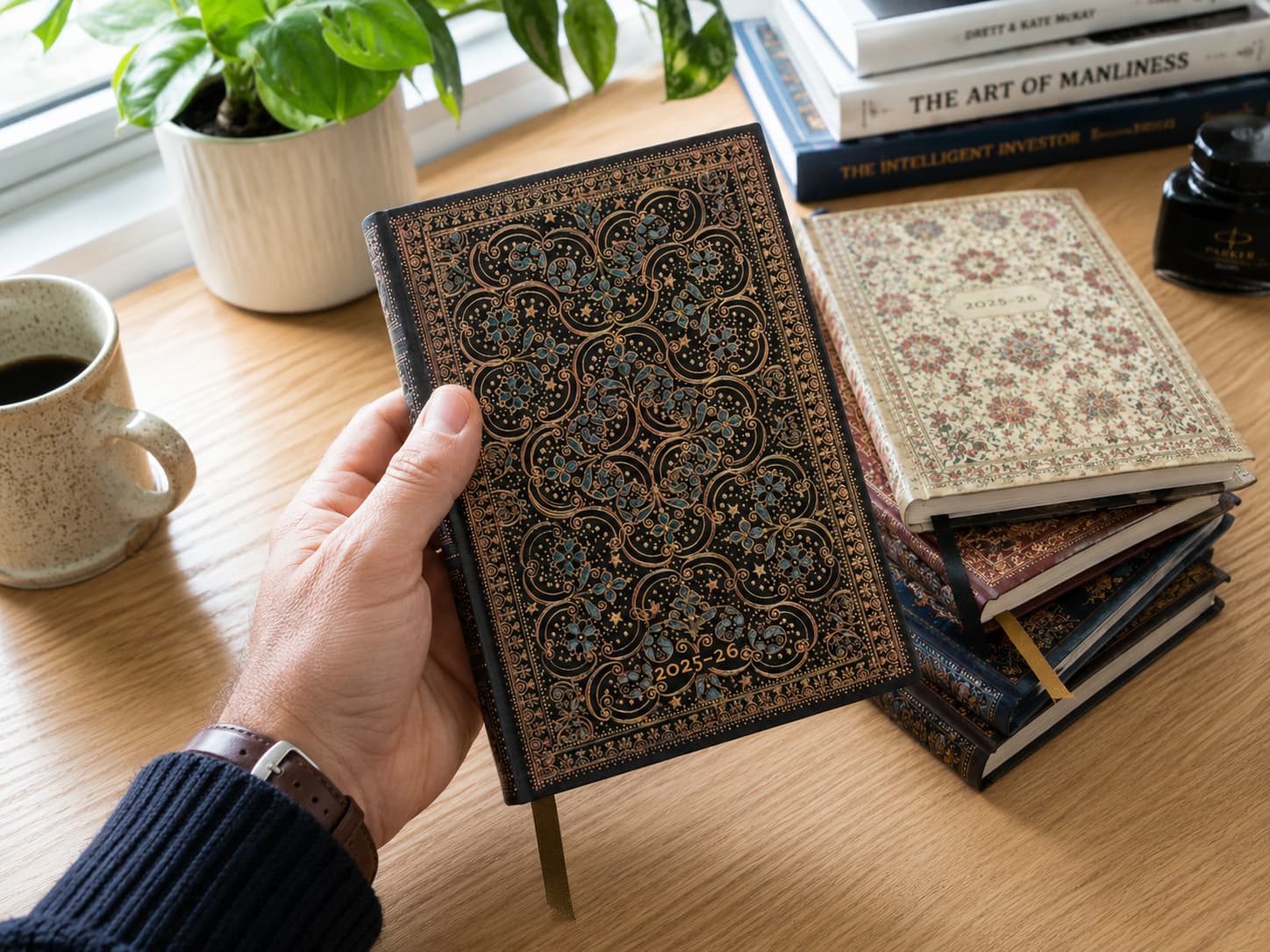
For writers who love a minimalist aesthetic, Nuuna notebooks are striking. They have a bold, modern look with a thick cover and black page edges. The paper is smooth and works well with fine-tipped pens. The grid is small and subtle. I admire the design but find the price high for what you get. Still, if the look matters to you, Nuuna delivers.
Stalogy makes a 365-day notebook that fits a year of daily writing into a slim A5 volume. The paper is thin but handles fountain pen ink surprisingly well. The cover is flexible and the binding is flat. I used one as a work log and liked how the whole year sat in a single book. The only downside is ghosting: you can see the writing on the other side, though it rarely interferes with reading.
Mnemosyne notebooks from Maruman have a cult following among writers who need precision. The paper is ultra-smooth, with a subtle grid, and the binding allows the notebook to open completely flat. I use one for calligraphy practice because the surface is so consistent. The brand also makes a unique stiff cover that protects the pages without adding much weight.
Budget and Availability
Not everyone can spend thirty dollars on a notebook. Exceed, sold at Walmart, offers a surprisingly good experience for the price. The paper is thick and handles fountain pen ink better than many mid-range brands. The cover is a soft faux leather, and the binding is stitched. I bought one on a whim and ended up using it for a full draft of a short story. It is not fancy, but it works. Dingbats notebooks are another budget-friendly option with a strong environmental focus. The paper is stone paper, which is waterproof and tear-resistant. It feels different from wood pulp paper, but it writes well and the brand plants trees for every purchase.
Archer and Olive makes beautiful hardcover notebooks with thick, 100 gsm paper that barely ghosts. The covers come in a range of colors and designs, and the inside pages are dotted or lined. They are popular with bullet journalists, but I have found them excellent for any kind of writing. The paper is so thick that you can use almost any pen without worry. The trade-off is weight: a full notebook is heavy.
Smythson is the luxury end of the market. Their Panama notebooks have gilt edges, leather covers, and paper that feels like silk. I was given one as a gift and used it to record travel notes. It is a beautiful object, but the cost means I hesitate to write freely. For everyday use, I prefer something I am not afraid to fill with mistakes.
The Intangible Factor
After testing all these brands, I have learned that the best journals for writing are the ones that make you want to write. That feeling is personal. I have a friend who swears by Peter Pauper Press notebooks for their vintage look and sturdy construction. Another colleague refuses to use anything but a softcover Leuchtturm1917. I have gone through phases with each of these, and right now my go-to is a plain Midori MD with a dot grid. It feels honest. It does not try to be anything other than a place to put words.

Minimalism Art makes a simple, unlined notebook that appeals to the same sensibility. No branding on the cover, no frills inside. Just good paper and a clean layout. I keep one on my nightstand for morning pages. The lack of structure helps me write without editing myself.
If you are new to the search, I suggest starting with one notebook from the midrange: a Rhodia, a Leuchtturm1917, or a Midori. Use it for a month. Pay attention to how it feels in your hand, how the paper behaves, and whether you look forward to opening it. Then try something different. The process of elimination is part of the fun. There is no wrong answer, only the wrong notebook for your current project.
The truth is that the best journals for writing do not exist in a single form. They exist in the relationship between the writer and the page. Find the one that disappears when you are in the flow, and you will have found yours.